

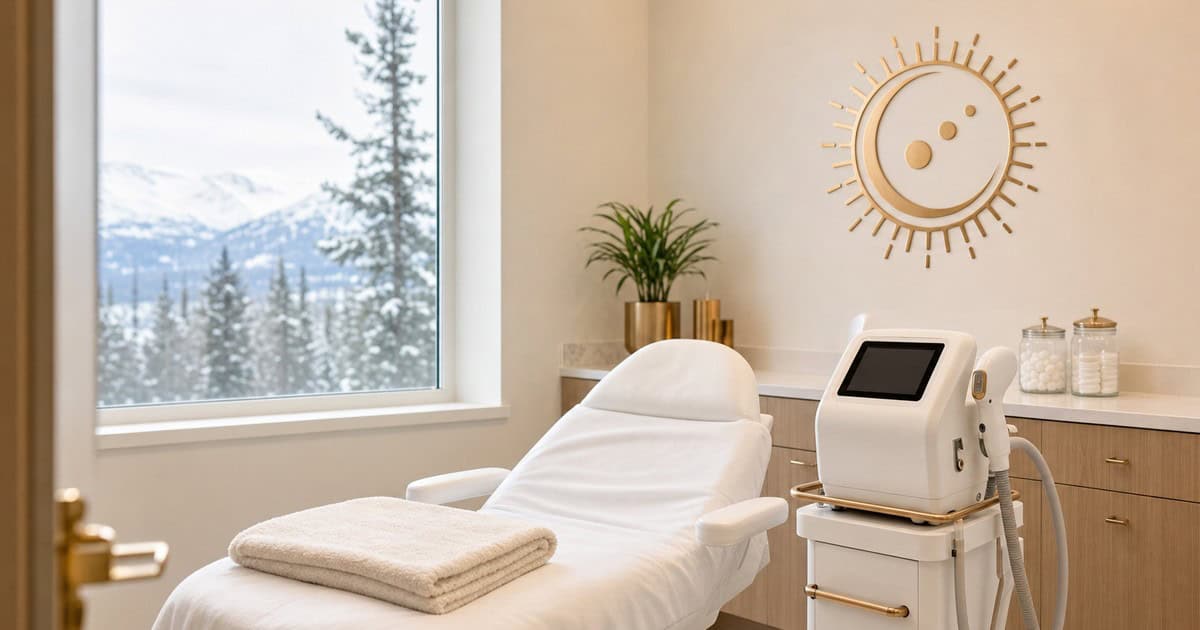
An IPL photofacial is one of the most popular light-based skin treatments for sun damage, redness and uneven skin tone. If you live in Anchorage, long summer days and reflected light from snow and water add up over the years, and many people start to notice brown spots, freckles and broken capillaries on the face, chest and hands. This guide explains what an IPL photofacial is, how IPL works, who is a good candidate, what a session feels like, and how to care for your skin afterward. It is general information, not medical advice: the right treatment plan always starts with a consultation.
What Is an IPL Photofacial?
IPL stands for intense pulsed light. Unlike a single-wavelength laser treatment, an IPL device delivers broad-spectrum light energy across multiple wavelengths. Filters let the provider choose which wavelengths reach the skin, so the treatment targets pigment (melanin) in sunspots and age spots, and hemoglobin in visible blood vessels and redness.
A photofacial is simply IPL performed on the face, although IPL photofacials are also commonly done on the neck, chest and hands. At Ageless Med Spa, IPL photofacial treatment is offered for the face, face and neck, face, neck and chest, chest and hands.
How Does an IPL Photofacial Work?
When light energy is absorbed by pigment or by blood vessels, it turns into heat. In simple terms, IPL breaks up excess pigment and helps reduce the look of small vessels. Over the following days, treated brown spots usually darken slightly and then flake away as the skin renews itself. Many people also notice a more even, radiant complexion, because IPL technology also stimulates collagen production in the deeper layer of your skin. This is how IPL photofacials work, and why IPL effectively treats several signs of sun damage at once.
Because IPL uses multiple wavelengths, one session can address several skin concerns at once. That is why IPL is often described as a skin rejuvenation treatment rather than a single-purpose spot remover.
Benefits of IPL Photofacial
An IPL photofacial offers benefits for various skin concerns:
- Fades sun damage: sunspots and age spots, freckles and other brown spots often look lighter after a series of sessions.
- Reduces redness: diffuse redness and some visible capillaries may appear less noticeable.
- Evens skin tone and texture: skin texture looks smoother and the overall skin looks clearer, for more even-toned skin.
- Non-invasive: no needles or incisions. It is an effective treatment that leaves skin with minimal downtime for most people.
- Treats more than the face: the neck, chest and hands show sun exposure too, and IPL can treat them in the same visit.
Who Is a Good Candidate for an IPL Photofacial?
IPL tends to work best on lighter skin tones, often described as light to medium skin tones, with visible pigment or redness. Darker skin tones have more melanin, which can absorb light energy and raise the risk of pigment changes, so IPL may not be the right treatment. In that case your provider may suggest options such as microneedling or chemical peels instead.
You may need to wait or choose a different skin treatment if you have a recent tan, are taking medications that make the skin sensitive to light, are pregnant, or have an active skin condition in the treatment area. Share your full medical history during the consultation so the provider can confirm IPL is safe for your skin type.
What to Expect During Your First IPL Photofacial
- Consultation: the provider reviews your skin concerns, skin type and goals, and builds a personalized treatment plan.
- Preparation: arrive with clean skin, no makeup, and avoid sun exposure and self-tanner beforehand.
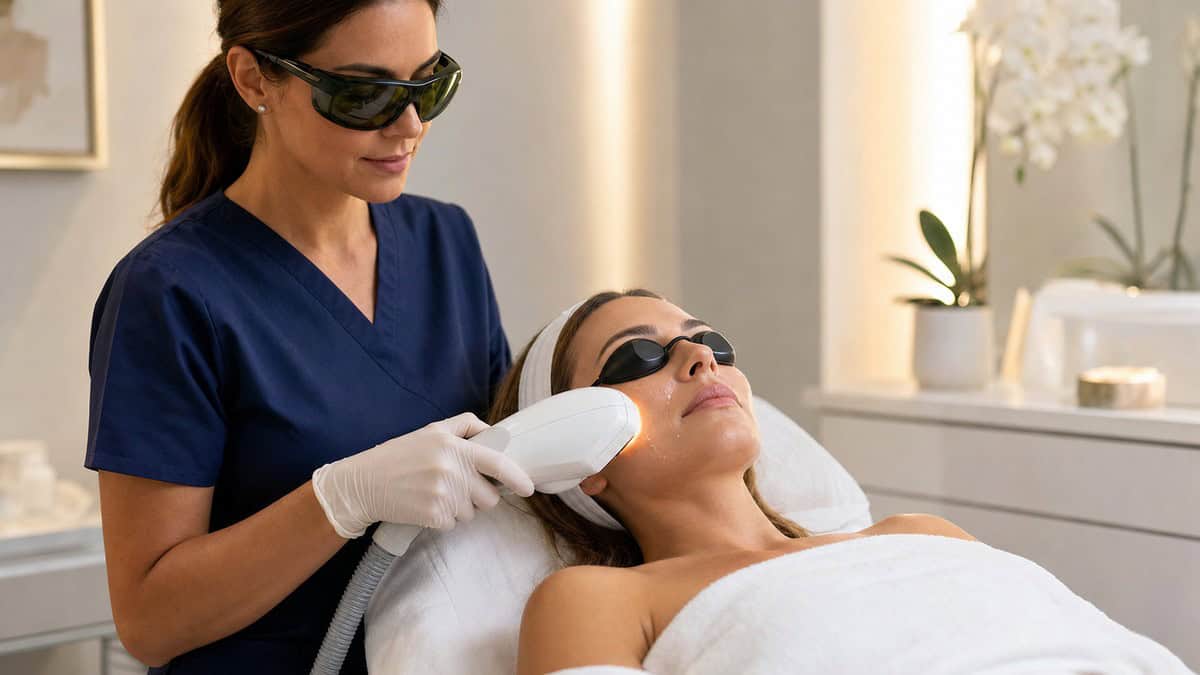
- Protection: you wear eye protection and a cool gel is applied to the treatment area.
- Treatment: the provider glides the IPL device over the skin. Each pulse feels like a quick warm snap, often compared to a rubber band against the skin.
- After: the session usually takes under an hour, and most people go back to normal activities the same day after an IPL treatment.
Recovery, Downtime and Side Effects
An IPL photofacial is known for little to no downtime, but every skin reacts differently. The most common effects of IPL are temporary. Typical effects following treatment include:
- Redness and mild swelling for a few hours to a couple of days.
- Brown spots that look darker, sometimes like coffee grounds, before they flake off over roughly one to two weeks.
- A warm, sunburn-like feeling right after the session.
Less common risks include blistering, crusting and changes in pigment. This is the main downside of IPL and the reason an experienced provider and correct settings matter. Contact the clinic if anything feels unusual.
How Many IPL Sessions Will You Need?
Many clients see a difference after one IPL session, but most treatment schedules involve a series of sessions spaced several weeks apart for the best results. The exact number depends on how much pigment or redness you have and how your skin responds. Your provider will recommend a customized treatment schedule during the consultation, and maintenance sessions can help keep results longer, especially if you protect your skin from UV.
How Long Do Results Last?
Treated spots can stay lighter for a long time, but IPL does not stop new sun damage. Daily sunscreen, hats and smart skincare help protect your skin from the sun and maintain an even skin tone. Many people schedule a touch-up once a year.
IPL vs Microneedling: Which Is Better?
They solve different problems. IPL targets color: pigmentation issues, sun damage and redness. Microneedling targets texture: fine lines, enlarged pores and acne scars, by creating tiny channels that trigger collagen. Combining IPL with microneedling or RF microneedling on separate visits is common in individualized treatment plans, but the right treatment depends on your skin. A consultation is the best way to decide.
How Much Does an IPL Photofacial Cost in Anchorage?
At Ageless Med Spa, current pricing for an IPL photofacial is $449 for the face, $599 for the face and neck, and $849 for the face, neck and chest, with lower prices for members through the membership program. Chest and hands are priced separately. Prices can change, so check the treatment page or ask during your consultation. Flexible financing is available through Cherry and CareCredit.
How to Prepare and Care for Your Skin
- Avoid tanning and direct sun exposure for at least two weeks before and after treatment.
- Pause retinoids and strong exfoliants before your session if your provider recommends it.
- Use a gentle cleanser and moisturizer afterward, and do not pick at flaking spots.
- Apply broad-spectrum SPF every day.
Frequently Asked Questions
What does an IPL photofacial do?
It uses intense pulsed light to fade sunspots and age spots, reduce redness and improve overall skin tone, with minimal downtime.
What is the downside of IPL?
It usually needs several sessions, results fade if you skip sun protection, and it is not ideal for darker skin tones. Side effects like redness and temporary darkening of spots are common.
Does IPL hurt?
Most people describe mild discomfort, like a warm snap. Cooling gel helps keep the session comfortable.
Transform Your Skin with IPL: Schedule Your Consultation in Anchorage
If sun damage, freckles or redness bother you, you can discover the benefits of IPL for yourself. An IPL photofacial may help you get clearer, more radiant skin. Ready to schedule your IPL photofacial? Book a consultation at Ageless Med Spa on E Dimond Blvd, or contact our team to learn whether IPL is the right treatment for you.


